
Slaying the $47 subscription hydra
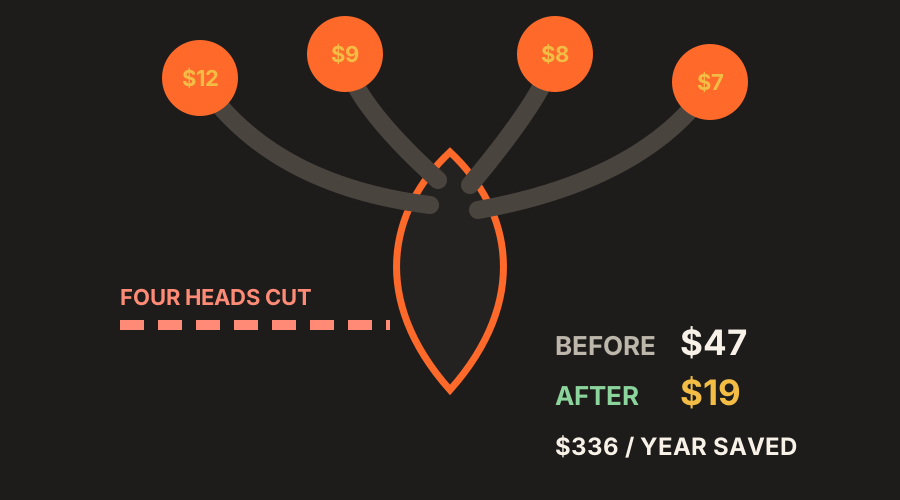
A 38-minute audit on August 2, 2026 cut seven subscriptions costing $47 per month to three costing $19. The four cancellations save $336 a year. One service required a support chat, one hid behind app-store billing, and two took under a minute to remove.
The hydra metaphor is dramatic; the charges were not. That was the problem. Seven renewals between $4 and $12 looked too small to deserve a Saturday morning. Together they took $564 a year, and three had not delivered a useful hour in the previous month.
Prepare the battlefield
I pulled 90 days of checking and credit-card transactions on August 2 and searched for repeating merchant names. Then I compared the list with Apple and Google subscription settings, because app-store descriptors do not always resemble the product name. Rocket Money can surface this work automatically; our 32-day Rocket Money test explains where that detection earns its score.
The rule was simple: keep a service if it was used at least twice in July, replaced a larger cost, or held specific value for the next 30 days. “I might use it” received no armor. Annual plans were converted to monthly equivalents, though this particular bundle happened to bill monthly.
The $47 battle log
| Charge | Monthly | Evidence | Decision |
|---|---|---|---|
| Video A | $12 | Watched 9 times | Keep |
| Music | $7 | Used daily | Keep |
| Cloud storage | $4 | Backup active | Keep |
| Fitness library | $9 | One use in July | Cancel |
| News bundle | $6 | Zero opens | Cancel |
| Photo editor | $5 | Duplicate tool | Cancel |
| Mobile game pass | $4 | Zero play sessions | Cancel |
Minute 0–6: the game pass lived under Apple subscriptions rather than on the game’s website. Cancellation took three taps and showed access through August 19. I captured the confirmation screen.
Minute 7–10: the photo editor had a visible account page and an honest cancel button. It offered 40% off for three months. I declined because a discount on an unused duplicate is still waste.
Minute 11–24: the fitness service supplied the boss fight. Its settings page directed me to chat, chat asked why, and the agent offered a pause. I wrote, “Please cancel at the end of the paid term and confirm no further charge.” That exact sentence stopped the negotiation loop.
Minute 25–31: the news bundle was billed directly. Canceling required a password reset, but the email arrived in two minutes. Minute 32–38: I checked every confirmation against the transaction list and set calendar reminders for August 20 and September 3 to catch any charge that survived.
Why three heads survived
The $7 music service logged daily use, the $12 video service covered nine shared viewing sessions, and $4 cloud storage maintained an active photo backup. Their combined $19 was not automatically virtuous, but it passed a clear test. A purge that removes useful entertainment often rebounds into a more expensive purchase later.
I also resisted annual-plan bait. Prepaying the $12 service would have saved $24 across a year, but viewing changes by season. Flexibility was worth $2 a month until the household proves six more months of steady use. That is the same annual-reality check used in our EveryDollar versus Rocket Money comparison.
The real annual gain
The immediate reduction was $28 a month, or $336 over 12 uninterrupted months. I moved $28 into an emergency-fund category on August 3 rather than letting the freed cash disappear. The first transfer makes the cut visible; automation makes it durable.
Renewal dates were added to one note with merchant, amount, payment route and cancellation location. That small registry removes the scavenger hunt next time. I will rerun the 90-day search on November 2, 2026. The hydra grows new heads quietly.
The 30-day confirmation round
A cancellation is not complete when the button changes color. I kept the $28 monthly amount inside checking until every old renewal date passed, then compared the August statement with the confirmations. The fitness library and news bundle showed no new charge. The photo editor sent a “come back” email but did not bill. The game pass disappeared from the active app-store list on August 20.
On September 3, the full $28 moved to savings for a second time. That made $56 of realized cash, rather than $336 of projected arithmetic. I will continue the transfer monthly and count annual savings only as each charge fails to appear. A canceled subscription can be replaced, a merchant can bill under a new descriptor, or freed money can leak into ordinary spending. My private log therefore has two columns—cost removed and cash actually redirected. Forecasts motivate; bank statements keep the score honest.
Frequently asked questions
How far back should a subscription audit look?
Ninety days catches monthly services and many free trials that converted. Also inspect app-store subscription settings and email receipts; a bank statement alone can miss annual renewals.
Should I cancel every unused subscription immediately?
Usually, but check paid-through dates, stored data and export options first. Download anything you need, cancel future renewal, and save the confirmation.
Can an app cancel subscriptions for me?
Some apps offer cancellation assistance for supported merchants. Manual cancellation remains useful because you see the retention offer, final access date and exact confirmation yourself.